


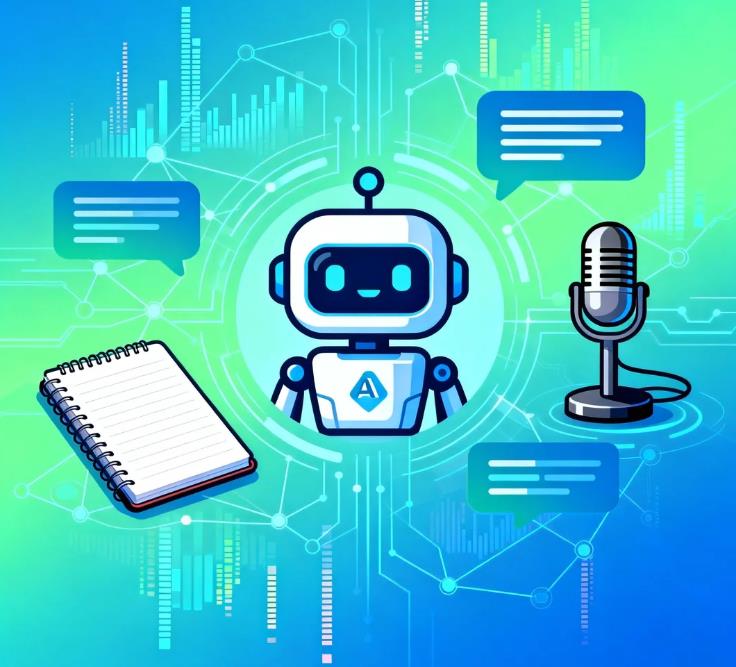

The way people work has changed permanently. Remote meetings, hybrid teams, and asynchronous collaboration are now standard across startups, enterprises, education, and consulting. Yet one critical problem remains unresolved for many organizations: how to reliably capture, organize, and act on what happens inside meetings.
Manual note-taking is slow, inconsistent, and often inaccurate. Important decisions are missed, action items get forgotten, and institutional knowledge fades quickly. This gap is exactly where AI meeting assistants that automatically take notes have emerged as a key productivity technology.
Modern AI meeting assistants no longer just record meetings. They transcribe speech in real time, identify speakers, generate structured summaries, extract action items, sync with CRMs, and integrate directly into daily workflows. For many teams, they are becoming as essential as email or project management tools.
This guide explores how AI meeting assistants work at a technical level, how they differ from traditional note-taking methods, what risks and limitations exist, and how today’s leading tools such as Otter, Fireflies, Fathom, Avoma, Gong, Notta, and others perform in real-world business environments. The goal is not to promote products, but to help you understand how this technology actually functions and how to evaluate it properly for long-term use.
Why Automatic AI Note-Taking Has Become a Core Business Need
The explosive growth of video conferencing platforms such as Zoom, Google Meet, and Microsoft Teams has created a new productivity bottleneck. Organizations now generate dozens or even hundreds of hours of meetings each month. Manually processing that information is no longer scalable.
Traditional human note-takers face several unavoidable limitations. They cannot simultaneously listen, analyze, summarize, and make strategic judgments with perfect accuracy. They interpret information subjectively. They get distracted. They miss details. Even when notes are well written, they often remain isolated documents rather than structured, searchable knowledge.
AI meeting assistants address these structural inefficiencies by automating the entire information lifecycle of a meeting. Audio is captured directly from conferencing platforms. Speech is converted to text using deep learning models. Natural language processing systems identify topics, decisions, and tasks. The resulting knowledge is indexed, searchable, and integrable with existing business systems.
The value of this shift is not limited to time savings. It fundamentally changes how teams retain knowledge, perform accountability, and scale collaboration across time zones and organizational boundaries.
How AI Meeting Assistants Technically Work Under the Hood
Understanding the internal architecture of AI meeting assistants helps clarify both their strengths and their limitations. These systems are built on a multi-stage artificial intelligence pipeline rather than a single model.
The first stage is audio capture and preprocessing. Most AI meeting assistants connect directly to conferencing APIs from Zoom, Teams, or Google Meet, allowing them to access high-quality audio streams rather than low-fidelity screen recordings. Noise reduction, echo cancellation, and channel separation are applied before transcription begins.
The second stage is automatic speech recognition. State-of-the-art systems rely on large transformer-based neural networks trained on massive multilingual speech datasets. These models convert audio into text while estimating confidence levels for each recognized token. Accent handling, overlapping speech, and domain-specific vocabulary remain technical challenges that vendors continuously optimize.
The third stage is speaker diarization. This process identifies which participant spoke each segment. Advanced systems use voice fingerprinting combined with meeting metadata to improve accuracy. Errors in this phase can lead to misattributed decisions and tasks, especially in fast-paced meetings with many participants.
The fourth stage is natural language understanding. At this layer, machine learning models identify intent, key topics, decisions, follow-ups, and semantic relationships. Large language models are increasingly layered on top of raw transcripts to generate human-readable summaries and structured meeting outputs.
The final stage is knowledge structuring and integration. Transcripts and summaries are indexed into databases, synced into tools such as Notion, Salesforce, HubSpot, Slack, or Google Docs, and exposed through APIs for automation workflows.
Each stage introduces its own failure modes. High transcription accuracy does not automatically guarantee accurate summaries. Strong summarization does not ensure compliance with privacy regulations. A professional evaluation of any AI meeting assistant must consider the entire pipeline, not just the surface features.
What Truly Defines a High-Quality AI Meeting Assistant
Many tools advertise similar feature lists, but practical differences appear once these tools are deployed at scale. Several performance dimensions matter far more than marketing claims.
Transcription accuracy is the most visible benchmark. Accuracy above 90 percent in clean audio conditions is now achievable. However, accuracy can drop significantly with heavy accents, background noise, technical jargon, or cross-talk between speakers.
Real-time versus post-processing capability also matters. Real-time transcription enables accessibility features, live captions, and immediate reference during meetings. Post-meeting processing allows for more advanced refinement and is often where higher-quality summaries are generated.
Speaker identification directly impacts accountability. Mislabeling speakers in sales or legal meetings can lead to costly misunderstandings.
Summary quality determines whether meeting outputs are actually usable. Some tools produce generic bullet lists, while others generate structured executive summaries, decision logs, and prioritized follow-ups.
Task and action extraction accuracy dictates whether AI can replace manual follow-up documentation. Low precision here creates more cleanup work rather than less.
Integration depth separates lightweight tools from enterprise-grade platforms. True workflow automation requires bidirectional synchronization with CRMs, task managers, calendars, and internal knowledge bases.
Security and compliance are non-negotiable for regulated industries. Encryption at rest and in transit, SOC 2 Type II certification, GDPR compliance, and optional data residency controls increasingly define vendor credibility.
The Real Business Benefits Across Different Teams
The impact of AI meeting assistants varies significantly depending on organizational role. Their value is not uniform across departments.
For sales teams, these tools transform pipeline management. Every discovery call, demo, and negotiation becomes fully searchable. Follow-up emails can be drafted automatically. CRM fields are populated without manual entry. Sales coaching improves through direct analysis of call transcripts and objection handling patterns.
For product teams, backlog creation becomes systematic. Feature requests, user complaints, and usability insights are extracted automatically from customer feedback sessions. Meeting decisions become permanent knowledge rather than informal agreements.
For management and leadership, decision intelligence improves. Strategic meetings can be reconstructed precisely months later. Accountability becomes data-driven. Meeting time itself tends to shorten as participants become more disciplined, knowing outputs are permanently recorded.
For HR and recruiting teams, interview documentation becomes consistent and auditable. Candidate comparisons become grounded in actual conversation logs rather than memory or subjective impressions.
For educators and consultants, AI meeting notes enable scalable knowledge reuse. Lectures, coaching sessions, and workshops become structured learning assets with minimal post-production effort.
The Inherent Risks and Limitations of Automatic Meeting Notes
Despite their impressive capabilities, AI meeting assistants are not flawless and should never be treated as infallible sources of truth.
Transcription errors remain the most obvious risk. Even small word substitutions can alter meaning in technical, medical, or legal contexts.
Summarization hallucinations have emerged as a new concern with the adoption of large language models. Some systems may generate plausible but incorrect interpretations when transcripts lack clarity.
Privacy and consent represent serious legal challenges. In many jurisdictions, all participants must explicitly consent to recording. Organizations must implement compliance workflows to avoid regulatory exposure.
Over-reliance on automation can degrade human listening skills. Teams may become less attentive if they treat recordings as substitutes for engagement rather than augmentation tools.
Cost also scales quickly at enterprise levels. Per-minute or per-user pricing models can exceed the cost of a full-time documentation specialist once usage reaches critical mass.
A Professional Framework for Evaluating AI Meeting Assistants
Selecting the right tool requires structured evaluation rather than feature checklist comparisons.
Accuracy benchmarks should be tested on real internal audio, not vendor demo recordings.
Summary usefulness should be evaluated by actual end users, not product managers.
Security documentation must be verified independently through compliance reports.
API documentation quality determines long-term integration viability.
Total cost of ownership should include storage, transcription minutes, support tiers, and compliance add-ons.
Vendor roadmap transparency matters in a rapidly evolving AI landscape. Tools that stagnate technologically quickly become obsolete.
Otter AI in Real Business Environments
Otter is one of the most widely recognized AI meeting assistants in the consumer and SMB market. It offers real-time transcription, automatic summaries, speaker identification, and tight integration with Zoom and Google Meet.
Its transcription accuracy is strong in clean audio environments and multilingual support is improving steadily. Otter’s interface emphasizes searchability and collaborative commenting on transcripts.
Limitations appear in advanced workflow automation and enterprise compliance. Otter is well suited for content creators, educators, journalists, and small teams but may lack the governance controls required by large enterprises.
Fireflies AI for Cross-Platform Meeting Automation
Fireflies distinguishes itself through extensive platform coverage and automation options. It supports Zoom, Teams, Google Meet, Webex, and dial-in calls, capturing meetings across diverse environments.
Its standout strength lies in its rich integration ecosystem. Fireflies connects with Slack, Asana, Notion, Salesforce, HubSpot, Google Drive, and dozens of other platforms, making it highly adaptable for workflow-driven organizations.
Search functionality across historical meetings is powerful, allowing keyword-based audio playback. For operations-heavy teams, Fireflies offers one of the strongest automation feature sets presently available.
Fathom as a Lightweight High-Accuracy Assistant
Fathom focuses on simplicity and speed. It provides near-instant meeting summaries, highlights, and action items without heavy configuration. Its Chrome extension is particularly popular among consultants and solo professionals.
Accuracy and summary clarity are consistently high. However, Fathom’s integration depth and enterprise features remain more limited compared to Fireflies or Avoma.
For individuals and small teams looking for frictionless automated note-taking, Fathom offers one of the lowest adoption barriers.
Avoma for Sales and Revenue Intelligence
Avoma positions itself not only as a meeting assistant but as a revenue intelligence platform. It combines transcription with pipeline analytics, deal forecasting, coaching metrics, and CRM automation.
Its meeting summaries are deeply structured for sales workflows. Objection tracking, competitor mentions, and deal-stage mapping add significant analytical value beyond transcription.
This specialization makes Avoma particularly valuable for B2B sales organizations but less relevant for non-revenue departments.
Gong and Enterprise Conversation Intelligence
Gong operates primarily at the enterprise revenue intelligence level. It records, transcribes, analyzes, and benchmarks sales conversations at scale.
Beyond note-taking, Gong applies AI to identify risk signals, coaching opportunities, competitor mentions, and deal health scores. The platform integrates deeply with Salesforce and other enterprise CRMs.
Its cost and complexity put it outside the reach of small teams, but for large sales organizations, it represents one of the most advanced AI conversation platforms on the market.
Notta for Multilingual and Mobile-First Use Cases
Notta emphasizes multilingual transcription and mobile accessibility. It supports real-time transcription across mobile, web, and desktop environments and works well for global teams requiring cross-language documentation.
Its offline recording and subsequent transcription capabilities differentiate it from purely meeting-embedded tools. For journalists, researchers, and international teams, Notta offers strong flexibility.
How AI Meeting Assistants Compare with Traditional Documentation Methods
Human note-takers excel in contextual judgment and emotional intelligence but struggle with scale and consistency. Manual recordings require time-consuming transcription and often remain unused due to search limitations.
AI meeting assistants provide unmatched scalability and recall but lack true semantic understanding and intentional judgment.
In practice, the most effective workflows combine AI automation with targeted human review for critical meetings.
Practical Workflow Automation with AI Meeting Data
The true power of AI meeting assistants is unlocked when they become part of larger automation systems.
Sales calls can automatically generate CRM activity logs, update opportunity stages, and trigger follow-up email sequences.
Product meetings can create Jira tickets automatically from extracted action items.
Customer interviews can populate research databases and qualitative analysis platforms.
Internal strategy meetings can update executive dashboards in real time.
These capabilities are increasingly enabled through Zapier, Make, native APIs, and direct SaaS integrations.
Data Privacy, Compliance, and Security in 2025
As organizations record more conversations, regulatory scrutiny intensifies. GDPR mandates data minimization and user consent. US wiretapping laws vary by state. HIPAA imposes strict safeguards for healthcare discussions.
Professional AI meeting assistants now commonly offer AES-256 encryption, SOC 2 Type II compliance, role-based access controls, and audit logs. Some offer options for regional data storage to meet sovereignty requirements.
Organizations must align their internal recording policies with vendor capabilities to mitigate legal risk.
Pricing Models and Real Cost Structures
Most platforms use per-user or per-minute pricing. Entry-level plans may appear inexpensive but often limit storage, transcription minutes, or integration access.
Enterprise plans include compliance certifications, API access, advanced analytics, and dedicated support.
Cost-benefit analysis should consider total meeting hours processed rather than surface subscription fees.
The Future Direction of AI Meeting Assistants
The next evolution of this technology will move beyond documentation into autonomous meeting intelligence.
Systems will increasingly track commitments across time, surface unresolved decisions, and provide predictive insights into project and deal outcomes.
Multimodal understanding will allow AI to analyze slides, screen sharing, voice tone, and facial expressions simultaneously.
Integration with digital agents may enable meetings where AI participants actively moderate discussions, capture consensus, and coordinate task delegation.
Choosing the Right AI Meeting Assistant for Your Organization
Small teams benefit most from lightweight tools with quick setup and minimal configuration. Sales organizations require CRM-centric platforms with pipeline intelligence. Enterprises must prioritize security, auditability, and scalability.
Testing with real internal meetings is the only reliable way to evaluate product fit. Free trials should be used for side-by-side comparisons using identical data.
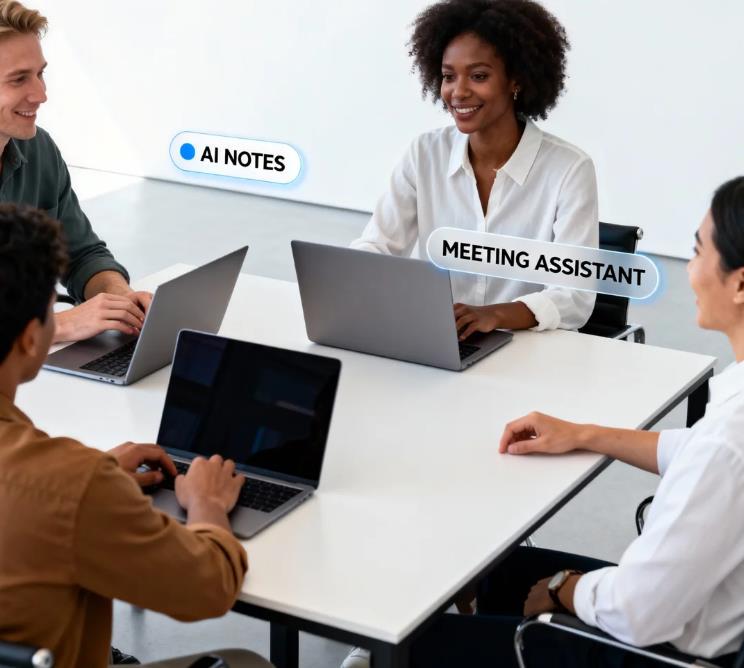
Final Perspective on AI Meeting Assistants in Modern Workflows
AI meeting assistants that automatically take notes are no longer experimental technology. They have become core infrastructure for many digital organizations.
Their greatest value lies not in transcription alone but in transforming ephemeral conversations into permanent, actionable knowledge. At the same time, organizations must remain aware of their limitations, privacy implications, and cost structures.
When deployed thoughtfully, AI meeting assistants can change not only how meetings are documented, but how decisions are made, tracked, and executed across the entire organization.