


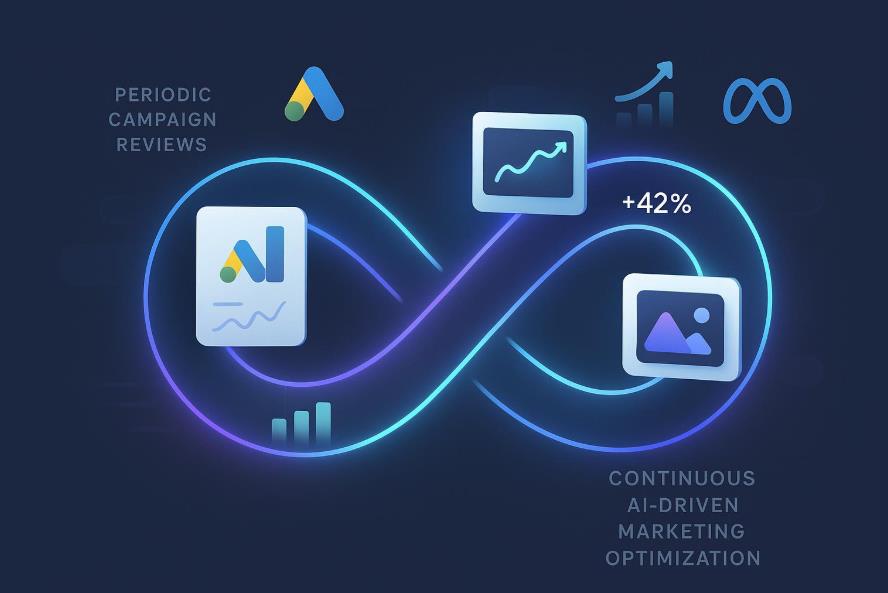

In the rapidly evolving landscape of digital marketing, artificial intelligence has emerged as a transformative force, fundamentally reshaping how businesses approach advertising campaigns. Platforms like Meta Ads and Google Ads, once reliant on manual targeting and human intuition, now leverage AI-driven optimization to deliver unparalleled efficiency, precision, and scalability. For marketers aiming to maximize ROI and reduce operational complexity, understanding the intersection of AI and automated ad management is no longer optional—it is essential.
The first step in embracing AI-powered advertising is understanding how these platforms harness machine learning algorithms to analyze massive datasets. Meta Ads, for instance, utilizes AI to evaluate user behavior, engagement patterns, and contextual relevance, allowing advertisers to dynamically adjust bids, target audiences, and creatives in real time. Similarly, Google Ads employs AI for automated bidding strategies, predictive performance analysis, and keyword optimization, ensuring that ads reach the most relevant audience while minimizing wasted spend. These AI systems do not simply automate routine tasks; they learn and evolve, continuously refining targeting parameters to improve campaign outcomes.
One of the most impactful applications of AI in advertising lies in predictive analytics. By analyzing historical campaign data alongside real-time signals, AI models can forecast which combinations of creatives, audiences, and placements are most likely to achieve desired outcomes. For example, programmatic advertising platforms integrated with Google Ads can use predictive algorithms to determine the optimal bid for each impression, taking into account user intent, device type, and even time of day. This level of sophistication empowers advertisers to move from reactive campaign management to proactive optimization, significantly enhancing both efficiency and profitability.
Audience segmentation has also been revolutionized through AI automation. Traditional segmentation often relied on broad demographic categories such as age, gender, or location, but AI enables hyper-personalized targeting based on behavioral patterns, psychographic insights, and interaction history. Meta Ads’ lookalike audience feature exemplifies this capability, allowing marketers to expand reach efficiently by identifying users who resemble their highest-value customers. By integrating these AI-driven audience insights with automated bid adjustments, businesses can achieve highly targeted campaigns with minimal manual intervention, a feature that is increasingly vital in competitive markets.
Creative optimization represents another domain where AI is driving substantial improvements in advertising performance. Machine learning algorithms can evaluate the effectiveness of various ad formats, headlines, images, and video clips, predicting which combinations will yield the highest engagement rates. Google Ads’ responsive search and display ad formats capitalize on this capability by automatically testing multiple creative variations and adjusting delivery based on performance data. For marketers, this means that campaigns can continuously adapt to shifting consumer preferences without requiring constant oversight, freeing up strategic resources for higher-level planning and innovation.
AI is also enhancing budget management and bidding strategies. Automated bidding leverages predictive models to determine the most cost-effective bids across channels and placements. For instance, target CPA (Cost Per Acquisition) and target ROAS (Return on Ad Spend) strategies use AI to optimize bids in real time, dynamically adjusting to audience behavior and competitive landscape changes. This approach reduces human error and ensures that every advertising dollar is allocated efficiently, a crucial consideration for campaigns aiming to maximize high-value conversions. Advanced AI-driven platforms can even identify underperforming segments and reallocate resources automatically, further enhancing campaign ROI.
Integration of AI with cross-channel marketing efforts is increasingly important as brands seek cohesive digital strategies. AI platforms can analyze performance across Meta Ads, Google Ads, programmatic networks, and even emerging channels like connected TV or influencer partnerships. By aggregating and interpreting data from multiple sources, AI enables marketers to identify patterns, forecast outcomes, and optimize campaigns holistically rather than in isolation. This multi-channel approach ensures consistency in messaging and maximizes the impact of marketing spend, reinforcing brand presence across the digital ecosystem.
Real-time performance monitoring has become a standard expectation in AI-optimized advertising. Unlike traditional reporting methods that often lag behind current performance, AI systems provide continuous insights into key metrics such as click-through rates, conversion rates, and engagement levels. Predictive dashboards allow marketers to anticipate shifts in consumer behavior and adjust campaigns proactively, whether by reallocating budget, modifying ad creatives, or refining audience targeting. This responsiveness is particularly crucial in fast-moving markets where consumer preferences can change within hours, and delays in optimization can lead to significant revenue loss.
The ethical considerations surrounding AI in advertising are also gaining prominence. Transparency in data usage, avoiding bias in automated targeting, and maintaining user privacy are critical issues that marketers must address. Platforms like Google and Meta have implemented robust privacy measures and compliance protocols, but advertisers themselves must also ensure that AI-driven strategies adhere to ethical guidelines. Responsible deployment of AI not only safeguards brand reputation but also builds consumer trust, which is increasingly recognized as a key driver of long-term success in digital marketing.
Another area of innovation is AI-powered predictive creative personalization. By combining AI analytics with dynamic content generation, marketers can deliver personalized ad experiences at scale. For example, AI can determine which product images, promotional messages, or video snippets resonate most with individual users based on browsing history and engagement data. This hyper-personalization increases the likelihood of conversion, strengthens brand affinity, and reduces ad fatigue. As consumer expectations for relevant and timely content rise, leveraging AI for creative personalization becomes a competitive necessity.
The financial implications of AI automation in advertising are profound. By streamlining campaign management, reducing manual intervention, and improving targeting accuracy, AI-driven platforms significantly lower operational costs while boosting revenue potential. Businesses can reallocate human resources from repetitive tasks to strategic planning, innovation, and customer relationship management. Furthermore, AI’s predictive capabilities allow for more precise forecasting and scenario planning, enhancing budget allocation decisions and maximizing the return on marketing investments.
Emerging trends indicate that AI in advertising will continue to evolve toward greater autonomy and intelligence. Innovations such as generative AI for creative production, advanced predictive bidding models, and real-time multi-channel orchestration are poised to redefine how campaigns are executed. Marketers who adopt these technologies early can achieve a strategic advantage, capitalizing on efficiency gains and superior targeting precision while competitors are still reliant on manual processes. The ongoing integration of AI into Meta Ads and Google Ads ecosystems exemplifies the potential for transformative impact across the industry.
The convergence of AI, automation, and digital advertising represents a paradigm shift for businesses operating in 2026 and beyond. AI-driven optimization empowers marketers to make data-driven decisions at unprecedented speed and scale, maximizing ROI while minimizing resource expenditure. From predictive analytics and audience segmentation to creative optimization and real-time monitoring, AI tools provide a comprehensive solution for the challenges of modern advertising. By embracing AI automation in Meta Ads and Google Ads, companies can achieve superior campaign performance, hyper-personalized targeting, and sustainable competitive advantage.
In conclusion, the integration of AI into advertising is no longer a futuristic concept; it is an operational imperative. Meta Ads and Google Ads platforms demonstrate how AI-driven strategies can automate bidding, optimize creative performance, and refine audience targeting to achieve exceptional results. The ability to predict outcomes, personalize experiences, and adapt campaigns in real time transforms the advertising process, enabling marketers to focus on strategic growth rather than manual optimization. As AI continues to advance, businesses that leverage these tools effectively will not only maximize advertising efficiency but also secure a dominant position in an increasingly competitive digital landscape. Investing in AI-powered advertising solutions is no longer optional; it is essential for businesses seeking to thrive in the age of data-driven marketing.