


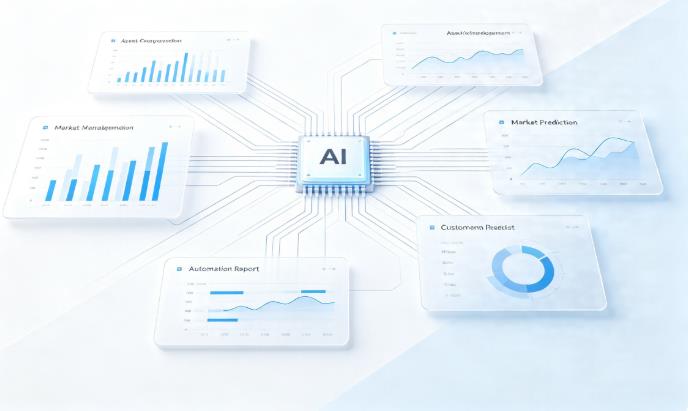

Artificial intelligence has rapidly evolved from an emerging technology into an essential business capability across virtually every industry. Among the sectors experiencing the most significant transformation, finance stands out as one of the earliest and most successful adopters of AI-driven innovation. From personal budgeting applications and automated investment platforms to enterprise-level financial planning systems and predictive analytics engines, AI finance and analytics tools are fundamentally changing how individuals and organizations manage, interpret, and act on financial information.
The financial world has always depended on data. Every transaction, investment, invoice, budget, and financial statement generates valuable information that can influence future decisions. Traditionally, financial professionals relied on spreadsheets, manual calculations, historical reports, and statistical models to analyze this information. While these methods remain useful, they often require substantial time, technical expertise, and human interpretation.
Artificial intelligence introduces an entirely different approach. Instead of simply processing historical data, modern AI systems continuously analyze massive datasets in real time, identify hidden relationships, recognize emerging trends, detect anomalies, and generate actionable insights within seconds. This shift allows financial professionals, business owners, investors, and even everyday consumers to make faster, more informed, and increasingly accurate financial decisions.
The growing popularity of AI finance tools is driven by several factors. Businesses face increasing economic uncertainty, inflationary pressures, evolving regulations, cybersecurity risks, and rapidly changing consumer behavior. At the same time, organizations generate more financial data than ever before through cloud accounting software, digital payment systems, e-commerce platforms, customer relationship management systems, and enterprise resource planning solutions. Human analysts alone can no longer efficiently process this expanding volume of information.
AI-powered analytics platforms bridge this gap by transforming raw financial data into meaningful intelligence. These systems automate repetitive tasks, improve forecasting accuracy, reduce operational costs, identify financial risks before they become critical, and enable executives to focus on strategic decision-making rather than manual reporting.
For individual consumers, AI is making financial management more accessible than ever. Intelligent budgeting assistants categorize spending automatically, recommend personalized savings strategies, monitor subscriptions, estimate future cash flow, and even provide early warnings when unusual spending patterns suggest fraud or financial stress. These capabilities help users build healthier financial habits while reducing the complexity traditionally associated with personal finance.
The investment industry has also embraced artificial intelligence at an unprecedented pace. AI-powered robo-advisors construct diversified portfolios based on an investor’s goals and risk tolerance. Machine learning algorithms evaluate thousands of market signals simultaneously, identifying opportunities that human analysts might overlook. Hedge funds and institutional investors increasingly rely on AI models to improve trading strategies, optimize asset allocation, and manage portfolio risk in highly volatile markets.
Corporate finance departments are experiencing similar benefits. Financial planning and analysis teams now leverage AI to automate monthly reporting cycles, forecast revenue with greater precision, model multiple business scenarios, detect accounting irregularities, optimize working capital, and improve cash flow management. These improvements not only enhance operational efficiency but also strengthen overall business resilience.
As generative AI becomes increasingly integrated into financial software, users can now interact with complex financial information using natural language. Rather than manually building formulas or dashboards, finance professionals can simply ask AI-powered systems questions such as, “Why did operating expenses increase last quarter?” or “Forecast next year’s revenue assuming a five percent increase in customer retention.” Within seconds, AI generates comprehensive analyses supported by data visualization and predictive models.
This transformation is no longer limited to large multinational corporations with extensive technology budgets. Small businesses, startups, freelancers, and independent financial advisors now have affordable access to sophisticated AI financial analytics tools through cloud-based Software-as-a-Service (SaaS) platforms. As pricing becomes more competitive and implementation becomes easier, AI adoption continues to accelerate across organizations of every size.
However, artificial intelligence is not replacing financial professionals. Instead, it is redefining their roles. Rather than spending countless hours collecting data and producing reports, finance experts increasingly focus on interpreting AI-generated insights, evaluating strategic alternatives, ensuring regulatory compliance, and making high-level business decisions that require human judgment and ethical reasoning.
Understanding how AI finance and analytics tools work—and how to use them responsibly—has become an essential skill for modern finance professionals, business leaders, entrepreneurs, investors, and consumers alike. Organizations that successfully combine artificial intelligence with sound financial expertise will likely gain significant competitive advantages in productivity, operational efficiency, and long-term profitability.
This article explores the rapidly evolving landscape of AI finance and analytics tools, examining their core technologies, practical applications, business benefits, implementation challenges, security considerations, and future trends. Whether you are managing your personal finances, leading a growing business, or planning your organization’s digital transformation, understanding the capabilities of AI-powered financial intelligence will help you navigate the increasingly data-driven economy of 2026 and beyond.
What Are AI Finance & Analytics Tools?
AI finance and analytics tools are software applications that combine artificial intelligence, machine learning, predictive analytics, automation, and advanced data visualization to improve financial decision-making. Unlike traditional financial software that primarily records historical transactions, AI-powered platforms actively interpret financial information, identify patterns, forecast future outcomes, and recommend actionable strategies.
These tools represent the convergence of several technological disciplines. Artificial intelligence provides the ability to simulate aspects of human reasoning. Machine learning enables systems to improve their performance as additional data becomes available. Natural language processing allows users to communicate with software using conversational English instead of complex formulas or programming languages. Predictive analytics applies statistical modeling and AI algorithms to estimate future financial performance based on historical and real-time data.
Modern AI finance platforms typically connect with multiple data sources simultaneously. They may integrate accounting software, banking systems, payment processors, payroll platforms, tax applications, customer relationship management systems, inventory databases, and external economic indicators into a unified analytical environment. By consolidating these information streams, AI creates a comprehensive financial picture that would be difficult for human analysts to assemble manually.
One of the defining characteristics of AI financial analytics is automation. Tasks that previously required hours—or even days—of manual effort can now be completed almost instantly. Expense categorization, invoice matching, cash flow reporting, financial statement analysis, budget variance detection, and monthly forecasting can all be performed automatically with minimal human intervention.
Beyond automation, AI introduces intelligence into financial workflows. Instead of simply presenting data, the software explains why certain financial outcomes occurred and predicts what is likely to happen next. For example, an AI-powered analytics platform might identify that declining customer retention, rising supplier costs, and seasonal demand fluctuations are collectively contributing to shrinking profit margins. It can then recommend potential corrective actions supported by quantitative analysis.
Another significant advantage lies in anomaly detection. Financial fraud, accounting errors, duplicate invoices, suspicious transactions, and compliance violations often exhibit subtle behavioral patterns that traditional rule-based systems fail to recognize. Machine learning models continuously monitor transaction activity, learning normal behavior over time and identifying unusual events that deserve further investigation.
AI finance tools also support scenario planning. Businesses frequently need to evaluate multiple strategic possibilities before making major decisions. Artificial intelligence can rapidly simulate different economic conditions, pricing strategies, hiring plans, capital investments, or market expansions, allowing executives to compare potential outcomes under various assumptions.
Cloud computing has significantly accelerated the adoption of AI financial analytics. Instead of investing in expensive on-premises infrastructure, organizations can subscribe to cloud-based platforms that provide scalable computing power, automatic software updates, enhanced cybersecurity, and seamless collaboration across geographically distributed teams.
Another important capability is real-time financial intelligence. Traditional reporting often relies on monthly or quarterly financial statements, limiting an organization’s ability to respond quickly to changing conditions. AI systems continuously process incoming transactions and operational data, enabling decision-makers to monitor financial performance almost instantly rather than waiting for scheduled reporting cycles.
As generative AI becomes increasingly integrated into finance platforms, users are also gaining access to conversational analytics. Rather than searching through spreadsheets or building complex dashboards, managers can ask questions in plain English and receive detailed explanations, visual reports, key performance indicators, and predictive insights within seconds.
The growing accessibility of AI finance software has expanded its user base beyond financial experts. Today, entrepreneurs, freelancers, nonprofit organizations, educators, healthcare providers, retailers, manufacturers, and service businesses all leverage AI-powered financial analytics to improve efficiency, reduce costs, and strengthen strategic planning.
Ultimately, AI finance and analytics tools are redefining the relationship between financial data and decision-making. Instead of treating financial information as a historical record, organizations increasingly view it as a dynamic source of predictive intelligence that supports continuous improvement, proactive risk management, and sustainable business growth.
Why AI Is Transforming Modern Finance
The financial industry has always been built on information. Banks evaluate creditworthiness, investors analyze market performance, businesses monitor profitability, and consumers manage personal budgets using financial data. What has changed dramatically in recent years is not the importance of data itself, but the overwhelming volume, velocity, and complexity of that data. Artificial intelligence has emerged as the only practical solution capable of converting this unprecedented amount of financial information into meaningful insights at scale.
Digital transformation has accelerated the creation of financial data across every industry. Every online purchase, mobile payment, subscription renewal, payroll transaction, inventory movement, customer interaction, and investment decision generates valuable information. Organizations now collect millions of data points every day, making manual analysis increasingly impractical.
Traditional financial reporting relies heavily on historical information. By the time reports are generated, reviewed, and distributed, the underlying business environment may have already changed. AI shifts finance from a reactive discipline to a proactive one. Instead of explaining what happened last month, AI identifies what is happening today and predicts what is likely to happen tomorrow.
One of the primary reasons AI is transforming finance is its ability to recognize complex relationships that humans might overlook. Financial performance rarely depends on a single variable. Revenue growth may be influenced by customer retention, seasonal demand, supply chain costs, marketing efficiency, interest rates, labor expenses, and macroeconomic conditions simultaneously. Machine learning models evaluate these interconnected variables continuously, revealing patterns that traditional spreadsheets cannot easily identify.
Economic uncertainty has also increased demand for AI-powered financial intelligence. Inflation, fluctuating interest rates, geopolitical instability, supply chain disruptions, and changing consumer behavior have made financial forecasting significantly more challenging. Businesses require flexible planning tools capable of adjusting forecasts as new information becomes available. AI continuously updates financial models using real-time data, allowing organizations to respond more quickly to changing market conditions.
Automation represents another major driver of AI adoption. Finance professionals spend a significant portion of their time performing repetitive administrative tasks such as transaction reconciliation, expense categorization, invoice processing, monthly reporting, and compliance documentation. AI automates these workflows, reducing human error while allowing financial teams to focus on higher-value strategic activities.
The increasing accessibility of cloud computing has further accelerated adoption. Cloud-based AI finance platforms no longer require organizations to purchase expensive servers or maintain complex infrastructure. Small businesses can now access enterprise-grade analytics capabilities through affordable subscription models, creating opportunities that were previously available only to large corporations.
Another important factor is the growing emphasis on data-driven decision-making. Investors, executives, regulators, and stakeholders increasingly expect financial decisions to be supported by quantitative evidence rather than intuition alone. AI provides decision-makers with continuously updated dashboards, predictive models, scenario analyses, and performance indicators that improve transparency and confidence.
Artificial intelligence is also enhancing collaboration across organizations. Financial information no longer remains isolated within accounting departments. Marketing teams, sales managers, operations leaders, human resources professionals, and executive leadership increasingly rely on shared financial dashboards to understand organizational performance. AI-powered analytics platforms make complex financial information easier to interpret through intuitive visualizations and conversational interfaces.
The rise of generative AI has introduced an additional layer of productivity. Finance professionals can now generate executive summaries, explain financial trends, compare budget scenarios, and prepare board reports using natural language prompts instead of manually assembling complex presentations. This capability significantly reduces administrative workload while improving communication across organizations.
As regulatory environments continue evolving, AI is becoming increasingly valuable for compliance management. Automated monitoring systems help organizations detect reporting inconsistencies, identify potential regulatory violations, maintain audit trails, and prepare documentation required by financial authorities. Rather than replacing compliance professionals, AI strengthens governance by improving accuracy and consistency.
Perhaps most importantly, AI enables organizations to become more proactive than reactive. Companies can identify cash flow challenges before liquidity problems arise, recognize customer payment risks before invoices become overdue, detect fraudulent activities before financial losses escalate, and adjust investment strategies before market conditions deteriorate. This predictive capability represents one of the most transformative aspects of modern financial intelligence.
Key Features of Modern AI Finance Platforms
Modern AI finance platforms combine multiple advanced technologies into integrated ecosystems that support virtually every aspect of financial management. While individual software solutions vary depending on their target market, most leading platforms share several core capabilities that distinguish them from traditional accounting or reporting software.
Intelligent Data Integration
Financial information often exists across multiple systems. Accounting software, enterprise resource planning platforms, payroll applications, banking services, payment processors, tax software, inventory management systems, and customer relationship management tools all generate valuable financial data. AI finance platforms automatically connect these sources, eliminating manual data transfers while creating a centralized view of organizational performance.
Integrated financial data improves reporting accuracy, reduces duplication, and enables more comprehensive analysis across departments.
Automated Financial Reporting
Preparing monthly financial reports has traditionally been one of the most time-consuming responsibilities for finance teams. AI dramatically simplifies this process by automatically generating income statements, balance sheets, cash flow reports, profitability analyses, and executive dashboards using continuously updated financial data.
Automated reporting not only saves time but also reduces inconsistencies that may result from manual spreadsheet manipulation.
Predictive Financial Forecasting
Forecasting represents one of the most valuable applications of artificial intelligence. Instead of relying exclusively on historical averages, AI forecasting models incorporate current market conditions, operational performance, customer behavior, seasonal trends, macroeconomic indicators, and external business factors.
As new information becomes available, forecasts continuously adjust themselves, allowing decision-makers to evaluate multiple business scenarios with significantly greater confidence.
Cash Flow Intelligence
Cash flow remains one of the most important indicators of organizational health. Even profitable businesses can experience financial distress if cash inflows and outflows are poorly managed.
AI analyzes payment histories, customer behavior, supplier obligations, payroll schedules, subscription renewals, and expected revenue to predict future liquidity. Early warning systems notify managers of potential cash shortages long before they become operational problems.
Expense Categorization and Spending Analysis
Artificial intelligence automatically classifies transactions into standardized expense categories using machine learning algorithms. Rather than manually assigning thousands of individual expenses, finance teams receive automatically organized financial records that improve reporting efficiency and budgeting accuracy.
Beyond categorization, AI identifies spending trends, unusual purchasing behavior, duplicate payments, and opportunities for cost reduction.
Risk Assessment
Financial risk extends far beyond investment volatility. Credit exposure, supplier concentration, customer defaults, currency fluctuations, operational disruptions, and cybersecurity threats all influence organizational stability.
AI evaluates these risks simultaneously using continuously updated data models. Instead of relying solely on historical probability calculations, machine learning systems adapt as market conditions evolve.
Fraud Detection
Fraud detection has become one of artificial intelligence’s most successful applications in financial services. Machine learning algorithms continuously monitor millions of transactions, identifying subtle behavioral anomalies that traditional rule-based systems frequently overlook.
Rather than waiting until fraudulent activity causes significant losses, AI identifies suspicious behavior almost immediately, enabling faster investigation and response.
Natural Language Financial Analysis
One of the newest innovations in AI finance software is conversational analytics powered by large language models.
Instead of manually creating formulas or navigating complex dashboards, users simply ask questions such as:
“Which departments exceeded budget this quarter?”
“Explain why operating margins declined.”
“Forecast revenue if customer growth increases by eight percent.”
The AI generates comprehensive responses supported by charts, statistical analysis, and explanatory narratives, making sophisticated financial analysis accessible to users without advanced technical expertise.
Interactive Dashboards and Data Visualization
Modern financial intelligence depends on effective communication. AI-powered dashboards convert large datasets into intuitive visualizations including revenue trends, profitability analyses, liquidity metrics, expense breakdowns, customer lifetime value, financial ratios, and operational KPIs.
Executives can quickly understand organizational performance without reviewing hundreds of pages of financial statements.
Continuous Learning
Unlike conventional software, AI systems improve over time. As organizations generate additional financial data, machine learning models refine their predictions, identify emerging behavioral patterns, and improve analytical accuracy.
This adaptive capability ensures that financial intelligence becomes increasingly valuable as businesses grow and operating environments become more complex.
AI for Personal Finance Management
Artificial intelligence is no longer reserved for multinational corporations or financial institutions. Millions of consumers now rely on AI-powered personal finance applications to improve budgeting, reduce debt, increase savings, and make more informed financial decisions.
Traditional budgeting required individuals to manually track expenses, organize receipts, calculate monthly spending, and reconcile bank statements. AI automates nearly every aspect of this process. Transactions are categorized automatically, recurring expenses are identified, spending habits are analyzed, and personalized recommendations are generated in real time.
One of the greatest advantages of AI budgeting tools is behavioral analysis. Instead of merely reporting where money was spent, AI identifies long-term spending patterns and suggests practical improvements. For example, the software may recognize increasing restaurant expenses, duplicate subscription services, seasonal spending spikes, or declining savings rates before these habits become financially problematic.
AI also supports smarter savings strategies. Intelligent budgeting assistants estimate upcoming expenses, calculate surplus income, and recommend realistic monthly savings targets based on actual spending behavior rather than generic financial guidelines.
Debt management has become another major application. AI finance platforms analyze multiple loans, credit cards, interest rates, payment schedules, and available cash flow to recommend optimized repayment strategies. Some systems simulate alternative payoff scenarios, helping users minimize interest costs while accelerating debt reduction.
Credit score monitoring has also become increasingly sophisticated. AI continuously evaluates credit utilization, payment history, outstanding balances, and borrowing behavior to estimate potential changes in credit scores before official reporting agencies update their records. This allows consumers to take proactive steps to protect or improve their financial health.
Security represents another significant benefit. AI-driven fraud detection systems monitor transaction behavior continuously, identifying unusual purchases, unauthorized account access, or suspicious payment activity almost instantly. Early alerts enable consumers to respond before significant financial damage occurs.
As conversational AI continues evolving, users increasingly interact with financial assistants through natural language rather than traditional budgeting interfaces. Instead of navigating multiple menus, individuals simply ask questions such as, “Can I afford a $3,000 vacation this summer?” or “How much should I save each month to buy a house in five years?” AI combines budgeting data, projected income, recurring expenses, and financial goals to deliver personalized recommendations supported by data-driven analysis.
For younger generations entering adulthood, AI financial coaching is becoming an essential educational resource. Rather than relying solely on financial advisors, consumers receive ongoing guidance tailored to their unique spending habits, investment objectives, and long-term financial priorities.
AI for Business Finance and Accounting
Artificial intelligence is redefining corporate finance by shifting financial teams away from repetitive administrative work and toward strategic decision-making. Historically, accounting departments spent a considerable amount of time on manual bookkeeping, transaction reconciliation, invoice processing, expense approvals, financial reporting, and compliance documentation. While these tasks remain essential, AI-powered automation now performs many of them with greater speed, consistency, and accuracy.
One of the most significant advantages of AI in business finance is intelligent automation. Modern accounting platforms automatically capture invoices using optical character recognition (OCR), classify expenses through machine learning, reconcile bank transactions, identify duplicate payments, and flag unusual accounting entries for review. These capabilities reduce manual workload while minimizing the likelihood of human error.
Financial close processes also become substantially faster with AI. Month-end and year-end closing traditionally require finance teams to verify thousands of transactions, reconcile multiple accounts, prepare journal entries, and generate financial statements under tight deadlines. AI streamlines these workflows by continuously monitoring financial records throughout the reporting period, allowing organizations to complete financial closes more efficiently.
Accounts payable and accounts receivable benefit equally from AI-driven optimization. Intelligent systems prioritize invoices based on payment deadlines, monitor customer payment behavior, predict late payments, and recommend proactive collection strategies. Businesses improve cash flow not simply by collecting revenue more quickly, but by understanding which customers are most likely to delay payments and taking preventive action before outstanding balances become problematic.
AI also improves budgeting across departments. Instead of creating annual budgets that remain static for months, organizations increasingly adopt rolling forecasts supported by machine learning. Budgets continuously evolve as new sales data, operating expenses, labor costs, and market conditions emerge. This dynamic approach allows executives to make informed decisions using current information rather than outdated assumptions.
Corporate financial planning has become more collaborative through AI-powered platforms. Finance teams, department managers, executives, and operational leaders can access shared dashboards that display real-time financial performance, budget utilization, profitability metrics, and key performance indicators. These centralized systems improve transparency while ensuring that financial decisions align with broader organizational objectives.
Another valuable capability involves profitability analysis. AI evaluates product margins, customer profitability, regional performance, operational costs, and pricing strategies simultaneously. Rather than analyzing each variable independently, machine learning identifies the combinations of factors that most strongly influence overall profitability. Organizations can then adjust pricing models, optimize product portfolios, and allocate resources more effectively.
Supply chain finance has also become increasingly data-driven. AI analyzes inventory turnover, supplier performance, transportation costs, procurement trends, and production schedules to optimize working capital. Businesses gain greater visibility into inventory investments while reducing unnecessary stock levels and minimizing supply chain disruptions.
Human resources departments increasingly collaborate with finance through AI analytics as well. Workforce planning models evaluate hiring costs, employee productivity, compensation trends, turnover rates, and training investments to estimate future labor expenses. These insights support sustainable workforce growth while maintaining financial discipline.
For multinational corporations, AI simplifies financial consolidation across multiple subsidiaries, currencies, and regulatory environments. Automated currency conversion, intercompany reconciliation, and consolidated reporting reduce administrative complexity while improving compliance with international accounting standards.
As generative AI continues advancing, finance professionals are also using conversational interfaces to prepare executive presentations, summarize quarterly performance, explain financial variances, and answer stakeholder questions using natural language. Instead of manually assembling reports, AI transforms structured financial data into clear, executive-ready narratives that improve communication throughout the organization.
Ultimately, AI enables finance departments to transition from transaction processing centers into strategic business partners. By automating operational tasks and enhancing analytical capabilities, organizations empower finance professionals to focus on long-term planning, capital allocation, performance optimization, and sustainable growth.
Predictive Analytics and Financial Forecasting
Financial forecasting has always been one of the most challenging responsibilities within business management. Every forecast requires assumptions about future customer demand, operating expenses, market conditions, inflation, interest rates, competitive pressures, and countless other variables. Traditional forecasting methods often rely heavily on historical averages and static spreadsheet models, limiting their ability to adapt to rapidly changing business environments.
Artificial intelligence fundamentally changes this process by introducing predictive analytics powered by machine learning. Instead of simply extending historical trends, AI continuously evaluates new information and updates financial projections accordingly.
Predictive analytics combines historical financial records with external data sources such as economic indicators, consumer sentiment, weather patterns, commodity prices, supply chain conditions, and industry benchmarks. Machine learning models identify relationships between these variables that would be nearly impossible for human analysts to calculate manually.
Revenue forecasting becomes substantially more accurate when AI considers multiple influencing factors simultaneously. Rather than assuming that future sales will resemble past performance, intelligent forecasting models evaluate marketing campaigns, customer acquisition rates, seasonal purchasing behavior, pricing changes, inventory availability, and broader economic conditions.
Expense forecasting also benefits from AI. Labor costs, supplier pricing, utility expenses, logistics costs, software subscriptions, and operational overhead rarely increase at identical rates. AI recognizes individual cost drivers while continuously adjusting future expense estimates as market conditions evolve.
Scenario planning represents another major advantage of predictive analytics. Business leaders rarely make decisions based on a single forecast. Instead, they evaluate multiple possibilities. AI enables organizations to simulate optimistic, conservative, and worst-case scenarios within minutes.
For example, executives may ask:
- What happens if interest rates increase by one percent?
- How would a ten percent decline in customer demand affect profitability?
- What if labor expenses rise faster than projected?
- How would expanding into a new market influence cash flow over three years?
Rather than manually rebuilding complex spreadsheets for every assumption, AI generates comparative models almost instantly.
Cash flow forecasting has become especially valuable for small and medium-sized businesses. Many profitable companies experience financial stress because revenue timing differs from expense obligations. AI predicts future cash availability by analyzing invoice payment patterns, customer behavior, recurring expenses, payroll schedules, tax obligations, and seasonal fluctuations.
Investment planning also benefits from predictive analytics. Organizations evaluating equipment purchases, facility expansions, technology upgrades, or acquisition opportunities can estimate long-term returns using AI-generated financial models that incorporate uncertainty and changing market conditions.
One of AI’s greatest strengths lies in continuous learning. Traditional forecasting models remain unchanged until analysts manually update assumptions. Machine learning models, however, continuously improve as new financial data becomes available. Forecast accuracy increases over time because algorithms learn from previous prediction errors and adjust future calculations accordingly.
Executives should recognize, however, that predictive analytics does not eliminate uncertainty. Unexpected geopolitical events, natural disasters, regulatory changes, technological disruptions, or sudden shifts in consumer behavior can influence financial performance beyond any model’s predictive capabilities. AI should therefore support strategic judgment rather than replace executive decision-making.
Organizations that combine predictive analytics with experienced financial leadership typically achieve stronger forecasting accuracy, faster response times, and more resilient long-term planning.
AI-Powered Investment Analytics
Investment management has undergone one of the most dramatic transformations driven by artificial intelligence. Investors today have access to unprecedented volumes of financial information, including earnings reports, economic indicators, social media sentiment, corporate filings, geopolitical developments, alternative datasets, and real-time market activity. Processing this information manually is virtually impossible.
AI-powered investment analytics platforms analyze millions of data points simultaneously to identify emerging trends, estimate asset valuations, monitor portfolio risk, and support more informed investment decisions.
Machine learning algorithms excel at recognizing complex market relationships. Instead of relying solely on traditional financial ratios, AI evaluates historical price movements, macroeconomic conditions, trading volumes, volatility patterns, corporate fundamentals, industry developments, and investor sentiment together.
Portfolio optimization has become increasingly sophisticated through AI. Rather than simply maximizing expected returns, intelligent investment platforms balance diversification, volatility, liquidity, sector exposure, currency risk, and investor objectives simultaneously. Recommendations continuously evolve as market conditions change.
Robo-advisors represent one of the most visible applications of AI in personal investing. These platforms automatically construct diversified portfolios based on an individual’s financial goals, investment horizon, and risk tolerance. As market conditions fluctuate, portfolios are periodically rebalanced to maintain alignment with long-term objectives.
Institutional investors have adopted even more advanced AI capabilities. Hedge funds, pension funds, insurance companies, and asset managers increasingly employ machine learning models for quantitative trading, risk management, derivatives pricing, and macroeconomic forecasting.
Alternative data has become another important component of AI investment analysis. Satellite imagery, shipping activity, credit card spending trends, online search behavior, supply chain data, and consumer sentiment indicators all provide additional signals that complement traditional financial statements.
Despite these advances, AI should not be viewed as a guaranteed source of superior investment performance. Financial markets remain influenced by human psychology, unexpected global events, regulatory changes, and structural economic shifts that no algorithm can predict perfectly.
Successful investors increasingly use AI as a decision-support tool rather than an autonomous decision-maker. Human expertise remains essential for evaluating qualitative factors such as corporate leadership, regulatory developments, competitive strategy, and long-term industry transformation.
The future of investment management will likely combine advanced artificial intelligence with experienced human judgment, creating more informed, disciplined, and adaptive investment processes than either approach could achieve independently.
Fraud Detection and Risk Management
Financial fraud has become increasingly sophisticated as digital transactions continue to grow across banking, e-commerce, investment platforms, and enterprise financial systems. Cybercriminals constantly develop new methods to exploit vulnerabilities, making traditional rule-based security systems less effective than they once were. Artificial intelligence has emerged as one of the most powerful tools for identifying suspicious activities before they result in significant financial losses.
Unlike conventional fraud detection systems that rely on predefined rules, AI continuously learns from transaction patterns and behavioral data. Machine learning algorithms establish a baseline of what constitutes normal financial activity for an individual, business, or institution. When unusual behavior occurs, the system immediately flags the transaction for further review.
For example, if a customer who normally makes local purchases suddenly initiates multiple high-value international transactions within a short period, AI recognizes the abnormal behavior and can trigger additional authentication procedures. Similarly, businesses can detect duplicate invoices, unauthorized vendor payments, unusual expense claims, or suspicious procurement activities before funds are transferred.
Financial institutions process millions of transactions every day, making manual review impossible. AI enables real-time monitoring at scale while reducing false positives that often overwhelm traditional fraud detection systems. Instead of blocking every unusual transaction, machine learning models evaluate multiple contextual factors such as transaction history, geographic location, device information, behavioral consistency, and historical risk profiles.
Risk management extends well beyond fraud prevention. Organizations face operational risks, market risks, liquidity risks, credit risks, regulatory risks, cybersecurity threats, and reputational risks. AI helps organizations evaluate these interconnected risks continuously rather than through periodic manual assessments.
Credit risk assessment is one of the most mature applications of AI. Traditional lending decisions relied primarily on credit scores, income verification, and debt-to-income ratios. Modern AI models incorporate a much broader range of variables, including payment behavior, employment stability, spending patterns, cash flow trends, and macroeconomic indicators. This enables lenders to make more accurate lending decisions while expanding access to responsible borrowers.
Enterprise risk management also benefits from predictive analytics. AI monitors supply chain disruptions, vendor concentration, foreign exchange exposure, commodity price fluctuations, and geopolitical developments that may affect business operations. Early warnings allow executives to implement contingency plans before risks escalate into financial crises.
Cybersecurity has become another critical area where AI delivers measurable value. Financial organizations experience constant threats from phishing attacks, ransomware, account takeovers, and identity theft. AI-powered security platforms analyze login behavior, network traffic, authentication patterns, and user activity to identify potential security breaches in real time.
Although AI significantly strengthens fraud prevention and risk management, it is not infallible. Human oversight remains essential when evaluating high-impact financial decisions, investigating suspicious activities, and ensuring ethical use of automated decision-making systems. The most effective organizations combine AI-powered monitoring with experienced financial professionals who can interpret complex situations and exercise informed judgment.
Data Privacy and Regulatory Compliance
As AI finance platforms become increasingly integrated into daily financial operations, data privacy and regulatory compliance have become central concerns for businesses, financial institutions, and consumers alike. Financial information is among the most sensitive categories of personal and corporate data, requiring organizations to maintain robust security standards while complying with evolving legal requirements.
Modern AI systems depend on access to large datasets to generate accurate insights. These datasets often include banking transactions, payroll information, tax records, investment portfolios, customer identities, and confidential business performance metrics. Protecting this information is essential not only for regulatory compliance but also for maintaining customer trust.
Many jurisdictions have introduced comprehensive data protection regulations designed to safeguard personal information. Organizations operating internationally may need to comply with multiple regulatory frameworks simultaneously, requiring careful governance over how financial data is collected, processed, stored, and shared.
AI can actually strengthen compliance efforts by automating regulatory monitoring and documentation. Intelligent systems continuously review financial transactions for potential compliance violations, maintain detailed audit trails, monitor policy adherence, and generate reports required by regulators. These capabilities reduce administrative burden while improving reporting accuracy.
However, AI also introduces new governance challenges. Machine learning models can become biased if they are trained using incomplete or unrepresentative datasets. In financial services, biased algorithms could unintentionally influence lending decisions, insurance underwriting, hiring practices, or investment recommendations. Organizations must therefore implement responsible AI governance frameworks that emphasize fairness, transparency, and accountability.
Explainability has become increasingly important as AI influences financial decision-making. Executives, regulators, auditors, and customers often need to understand why an AI system reached a particular conclusion. Explainable AI techniques help organizations interpret model outputs, improving transparency while supporting regulatory compliance.
Cybersecurity remains equally important. Financial organizations increasingly implement encryption, multi-factor authentication, identity management systems, zero-trust security architectures, and continuous threat monitoring to protect AI-powered financial platforms against unauthorized access.
Cloud computing providers also play a significant role in protecting financial data. Reputable cloud vendors invest heavily in infrastructure security, disaster recovery, business continuity planning, and regulatory certifications that many individual organizations would struggle to implement independently.
Ultimately, responsible AI adoption requires balancing innovation with governance. Organizations that prioritize ethical AI development, strong cybersecurity, transparent decision-making, and regulatory compliance will be better positioned to build sustainable trust with customers, investors, employees, and regulators.
Future Trends in AI Finance & Analytics
Artificial intelligence is still in the early stages of transforming the financial industry. While current AI platforms already automate reporting, improve forecasting, and strengthen decision-making, the next generation of financial intelligence promises even greater capabilities.
One of the most important trends is the rise of AI agents. Unlike today’s AI assistants, future AI agents will perform complex financial workflows autonomously. Rather than simply answering questions, these systems will prepare budgets, negotiate supplier contracts, monitor financial risks, generate board reports, recommend investment strategies, and coordinate multiple financial applications with minimal human intervention.
Generative AI will continue reshaping financial communication. Executives will increasingly rely on AI to summarize earnings reports, explain financial performance, prepare investor presentations, draft compliance documentation, and generate personalized financial recommendations using natural language.
Hyper-personalization will become another defining trend. Personal finance platforms will tailor budgeting strategies, savings plans, debt repayment recommendations, insurance options, and investment portfolios based on each individual’s financial behavior, life goals, income patterns, and risk tolerance.
Real-time analytics will become the industry standard. Instead of relying on monthly or quarterly reporting cycles, organizations will continuously monitor financial performance using live dashboards that integrate operational, accounting, customer, and market data into unified decision-making platforms.
Autonomous financial planning will also gain momentum. AI systems will simulate multiple strategic scenarios automatically, evaluate alternative business decisions, estimate long-term financial outcomes, and recommend optimal resource allocation strategies supported by predictive analytics.
Environmental, Social, and Governance (ESG) reporting is expected to become increasingly integrated into AI finance platforms. Organizations will use AI to measure sustainability performance, monitor regulatory disclosures, evaluate climate-related financial risks, and improve transparency for investors seeking responsible business practices.
Blockchain technology and AI are also becoming more closely connected. Smart contracts, decentralized finance, tokenized assets, and blockchain-based accounting systems may increasingly incorporate AI to automate verification, compliance, auditing, and financial reconciliation processes.
Small businesses will benefit significantly from these innovations. Cloud-based AI platforms are becoming more affordable, allowing startups and small enterprises to access sophisticated financial analytics that were once available only to multinational corporations. This democratization of financial intelligence may reduce competitive barriers while accelerating digital transformation across industries.
Despite rapid technological advancement, human expertise will remain indispensable. Financial leadership requires ethical reasoning, strategic thinking, negotiation skills, emotional intelligence, and contextual judgment that extend beyond algorithmic analysis. The future of finance will therefore be defined by collaboration between intelligent machines and experienced professionals rather than competition between them.
Organizations that embrace AI thoughtfully—while investing in employee education, responsible governance, cybersecurity, and continuous innovation—will likely achieve greater resilience, stronger financial performance, and sustainable competitive advantages in the years ahead.
Frequently Asked Questions
What are AI finance and analytics tools?
AI finance and analytics tools are software platforms that use artificial intelligence, machine learning, predictive analytics, and automation to improve financial planning, reporting, forecasting, budgeting, investment analysis, fraud detection, and business decision-making.
Can small businesses benefit from AI finance software?
Yes. Many cloud-based AI financial platforms are specifically designed for small and medium-sized businesses. They help automate bookkeeping, improve cash flow management, generate financial forecasts, reduce administrative workload, and support better business decisions without requiring large technology budgets.
Does AI replace accountants or financial analysts?
No. AI automates repetitive tasks and provides analytical insights, but professional judgment, strategic planning, regulatory expertise, and ethical decision-making still require experienced financial professionals. AI is best viewed as a productivity tool that enhances—not replaces—human expertise.
Is AI financial forecasting always accurate?
No forecasting model can predict the future with complete certainty. AI generally produces more accurate forecasts than traditional methods because it analyzes larger datasets and continuously updates predictions. However, unexpected economic events, regulatory changes, or geopolitical developments can still affect financial outcomes.
Is financial data safe when using AI platforms?
Security depends on the software provider and the organization’s cybersecurity practices. Reputable AI finance platforms typically implement encryption, access controls, multi-factor authentication, continuous monitoring, and regulatory compliance measures to protect sensitive financial information.
Artificial intelligence is fundamentally transforming the way individuals, businesses, and financial institutions manage money, interpret financial information, and make strategic decisions. What was once considered an experimental technology has become an essential component of modern financial management, enabling organizations to analyze data more efficiently, automate complex workflows, reduce operational risk, and uncover valuable insights that support sustainable growth.
The greatest value of AI finance and analytics tools extends beyond automation. Their true strength lies in converting massive volumes of financial data into actionable intelligence. Predictive analytics, intelligent forecasting, real-time reporting, fraud detection, investment analysis, and conversational financial assistants empower decision-makers to respond more quickly and confidently in an increasingly dynamic economic environment.
Nevertheless, successful AI adoption requires thoughtful implementation. Organizations must balance technological innovation with responsible governance, regulatory compliance, cybersecurity, and human oversight. Artificial intelligence should complement professional expertise rather than replace it. The combination of advanced analytics and experienced financial leadership creates stronger, more resilient decision-making than either approach alone.
As AI technologies continue to evolve, finance will become increasingly proactive, personalized, and data-driven. Businesses that invest in intelligent financial systems today will be better equipped to navigate economic uncertainty, improve operational efficiency, identify emerging opportunities, and build lasting competitive advantages.
For individuals, AI offers practical tools to improve budgeting, manage debt, strengthen savings, monitor investments, and make smarter financial choices. For organizations, it provides the analytical foundation needed to drive innovation, improve profitability, and compete successfully in a rapidly changing global economy.
The future of finance will not be defined solely by artificial intelligence or by human expertise. Instead, it will belong to organizations and individuals who successfully combine both—leveraging AI to enhance insight, efficiency, and strategic thinking while relying on human judgment to guide ethical, responsible, and sustainable financial decisions.