


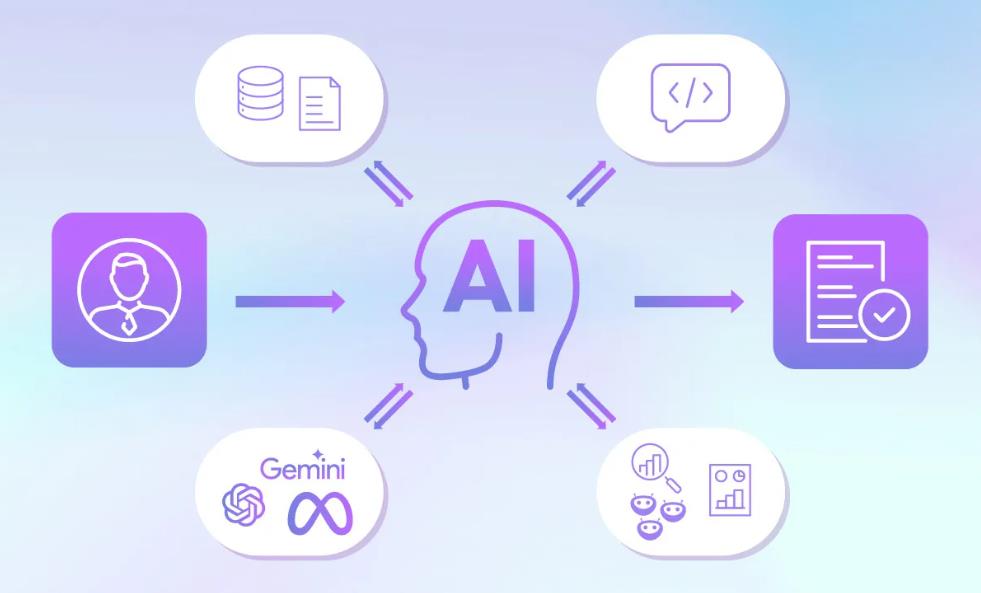

Imagine a world where your enterprise’s workflows don’t just run on autopilot—they think for themselves. A world where routine tasks are handled not just efficiently, but strategically; where data is analyzed not just for insights, but for actionable decisions; where your team is freed from the burden of repetitive work to focus on innovation, creativity, and high-impact goals. This isn’t science fiction—it’s the reality of AI Agents, the next evolution of artificial intelligence that’s reshaping how enterprises operate, compete, and grow in the 2020s.
As a U.S.-based Indie Hacker and AI Consultant, I’ve spent the past three years immersed in the intersection of AI innovation and enterprise operations. I’ve worked with startups, mid-sized companies, and Fortune 500 teams alike—watching them struggle with outdated workflows that rely on manual effort, disjointed tools, and rigid automation that can’t adapt to the chaos of modern business. I’ve also witnessed firsthand how AI Agents are transforming these workflows: turning reactive, manual processes into proactive, autonomous systems that don’t just follow rules, but make decisions, solve problems, and even anticipate challenges before they arise.
Let’s be clear: AI Agents are not just “better automation” or “smarter chatbots.” They are autonomous, goal-driven AI systems that can perceive, reason, act, and learn—all without constant human intervention. Unlike traditional automation tools (which require you to code every step, update every rule, and intervene at every bottleneck), AI Agents can understand context, prioritize tasks, collaborate with other tools and humans, and adapt to changing circumstances. They bridge the gap between passive automation (doing what you tell it to do) and active autonomy (doing what needs to be done to achieve a goal).
For enterprises in markets—where speed, agility, and data-driven decision-making are non-negotiable—this shift is nothing short of revolutionary. Consider this: a mid-sized SaaS company I consulted with was spending 40+ hours per week on manual data reconciliation, customer onboarding, and project task prioritization. After implementing AI Agents, they cut that time by 70%, reduced human error by 85%, and saw a 35% increase in team productivity—all while reallocating their top talent to focus on product innovation and customer retention. This isn’t an anomaly; it’s the new standard for enterprises that want to stay competitive in an era where AI is no longer a “nice-to-have” but a “must-have.”
In this article, I’ll dive deep into how AI Agents are (reconstructing) enterprise workflows—from the foundational shift from automation to autonomy, to the real-world applications across departments (operations, finance, customer success, and more). I’ll unpack the technical capabilities that make AI Agents unique, share case studies from my consulting work (including how a Fortune 300 company used AI Agents to streamline their supply chain and reduce costs by 28%), debunk common myths about AI autonomy, and outline a step-by-step framework for enterprises to implement AI Agents effectively. Whether you’re an enterprise leader looking to modernize your workflows, an IT decision-maker tasked with scaling AI initiatives, or a team member curious about how AI will impact your role, this article will give you the actionable insights and professional context you need to navigate the AI Agent revolution.
By the end, you’ll not only understand the difference between AI automation and AI Agents—you’ll know how to leverage these powerful tools to transform your enterprise’s workflows, drive efficiency, and unlock new levels of innovation. Because in today’s fast-paced business landscape, the enterprises that thrive won’t be the ones that automate the most tasks—they’ll be the ones that empower their workflows to make autonomous, strategic decisions.
The Evolution of AI in Enterprise Workflows: From Automation to Autonomy
To fully grasp the impact of AI Agents, we first need to trace the evolution of AI in enterprise workflows—a journey that has moved from basic rule-based automation to the autonomous decision-making capabilities of today’s AI Agents. This evolution is critical to understanding why AI Agents are not just an incremental improvement, but a paradigm shift.
For decades, enterprises relied on rule-based automation to streamline repetitive tasks. Tools like RPA (Robotic Process Automation) and basic workflow management software allowed companies to automate simple, predictable tasks—like data entry, invoice processing, and email routing. These tools were valuable: they reduced manual effort, minimized human error, and freed up employees to focus on more complex work. But they had a fundamental limitation: they could only do what they were explicitly programmed to do. They couldn’t adapt to unexpected changes, interpret context, or make decisions beyond their pre-defined rules.
For example, an RPA tool might be programmed to process invoices by extracting data from a PDF and entering it into an accounting system— but if the invoice format changes, the tool breaks. If there’s a discrepancy in the invoice amount, the tool can’t flag it or suggest a solution; it simply stops working and waits for human intervention. This is “passive automation”: the tool follows rules, but it doesn’t think.
Next came AI-powered automation—tools that used machine learning (ML) and natural language processing (NLP) to add a layer of intelligence to automation. These tools could learn from data, recognize patterns, and adapt to minor changes. For example, an AI-powered customer service tool could understand customer queries (even if they’re phrased differently) and route them to the right team, or generate a personalized response. A sales automation tool could analyze customer data to prioritize leads based on conversion likelihood.
While this was a significant step forward, AI-powered automation still relied on human direction. The AI could handle more complex tasks, but it couldn’t set its own goals, prioritize tasks independently, or collaborate across multiple tools and departments without human oversight. It was “semi-autonomous”—smarter than rule-based automation, but still dependent on human input to function effectively.
This is where AI Agents come in. AI Agents are the next evolution: fully autonomous systems that combine ML, NLP, computer vision, and reinforcement learning to perceive their environment (enterprise data, tools, and workflows), reason about their goals, act on those goals, and learn from their actions. Unlike rule-based or AI-powered automation, AI Agents don’t just follow instructions—they pursue objectives. They can:.
- Understand context: Analyze unstructured data (emails, documents, customer feedback) and structured data (CRM records, financial reports) to grasp the full context of a task.
- Set priorities: Determine which tasks are most critical to achieving a goal, even if those tasks aren’t explicitly programmed.
- Collaborate: Work with other AI Agents, enterprise tools (CRM, ERP, project management software), and humans to complete complex workflows.
- Adapt: Adjust their approach if a task doesn’t go as planned (e.g., if a data source is unavailable, an AI Agent can find an alternative).
- Learn: Improve their performance over time based on feedback and new data, without requiring manual updates to their programming.
To put this in perspective, let’s compare three approaches to a common enterprise task: customer onboarding. A rule-based automation tool would follow a pre-defined sequence: send a welcome email, create a customer record in the CRM, and assign a onboarding specialist. An AI-powered automation tool might personalize the welcome email based on the customer’s industry and flag high-priority customers for the specialist. An AI Agent, however, would do all that—and more: it would analyze the customer’s onboarding history, identify potential roadblocks (e.g., a missing document), reach out to the customer to request the document, update the CRM in real time, and notify the onboarding specialist only when human intervention is truly needed. It doesn’t just automate the steps—it manages the entire process, proactively solving problems and ensuring the onboarding process is smooth and efficient.
This shift from automation to autonomy is what makes AI Agents a game-changer for enterprises. They don’t just save time—they transform how workflows are designed, executed, and optimized. They turn static, rigid processes into dynamic, adaptive systems that can keep up with the pace of modern business.
The Technical Foundations of AI Agents: What Makes Them Autonomous?
To understand how AI Agents can enterprise workflows, it’s essential to unpack the technical capabilities that enable their autonomy. Unlike basic AI tools, AI Agents are built on a foundation of advanced technologies that work together to enable perception, reasoning, action, and learning. Below are the core technical components that power AI Agents—and how they work together to drive autonomous decision-making.
1. Large Language Models (LLMs) & Natural Language Understanding (NLU)
At the heart of most AI Agents is a Large Language Model (LLM)—like GPT-4, Claude 3, or Gemini—paired with advanced Natural Language Understanding (NLU). LLMs enable AI Agents to process and generate human language, understand context, and interpret unstructured data (e.g., emails, contracts, customer feedback). NLU takes this a step further: it allows AI Agents to grasp the intent behind language, not just the literal meaning.
For enterprises, this means AI Agents can interact with humans and tools in natural language, eliminating the need for complex coding or user training. For example, an AI Agent tasked with managing a project can read project updates in Slack, understand that a team member is behind schedule, and automatically adjust the project timeline—all without human input. It can also generate reports, draft emails, and answer employee questions in natural language, making it easy for teams to collaborate with the agent.
But LLMs aren’t just for language: they also enable AI Agents to understand structured data by translating it into a format the agent can process. For example, an AI Agent focused on finance can read a spreadsheet of financial data, understand the trends, and generate a summary report with actionable insights—all in natural language. This ability to bridge structured and unstructured data is critical for enterprise workflows, which often rely on both types of data to make decisions.
2. Reinforcement Learning (RL) & Goal-Oriented Behavior
Unlike traditional AI tools, which are trained on historical data to predict outcomes, AI Agents use Reinforcement Learning (RL) to learn how to achieve specific goals. RL works by rewarding the agent for actions that move it closer to a goal and punishing it for actions that move it away. Over time, the agent learns the optimal path to achieve the goal—even in dynamic, unpredictable environments.
For enterprises, this means AI Agents can pursue long-term goals without constant human oversight. For example, an AI Agent tasked with reducing supply chain costs might experiment with different suppliers, track the impact of those decisions on costs and delivery times, and refine its approach over time to maximize savings. It doesn’t just follow a pre-defined set of rules—it learns from experience to make better decisions.
Goal-oriented behavior is what sets AI Agents apart from other AI tools. A traditional automation tool might be programmed to “reduce supply chain costs by 10%,” but it can’t adapt if the market changes or a supplier raises their prices. An AI Agent, however, will adjust its strategy—finding new suppliers, negotiating better terms, or optimizing inventory levels—to ensure the goal is met, even if circumstances change.
3. Tool Integration & API Connectivity
AI Agents can’t operate in a vacuum—they need to connect with the enterprise tools and systems that power daily workflows. This is where API connectivity and tool integration come in. AI Agents are built to integrate seamlessly with popular enterprise tools: CRMs (Salesforce, HubSpot), ERPs (SAP, QuickBooks), project management software (Asana, Trello), communication tools (Slack, Microsoft Teams), and more.
This integration allows AI Agents to access data from multiple sources, execute actions across tools, and coordinate workflows across departments. For example, an AI Agent focused on customer success can pull data from the CRM (customer purchase history), the support ticketing system (customer issues), and the marketing automation tool (customer engagement) to create a personalized customer retention plan. It can then send a personalized email to the customer (via the marketing tool), update the CRM with the plan, and notify the customer success manager (via Slack)—all in a single, autonomous workflow.
The best AI Agents also have “tool use” capabilities: they can learn how to use new tools on their own, without manual programming. For example, if an enterprise adopts a new project management tool, an AI Agent can read the tool’s documentation, learn how to use its features, and integrate it into existing workflows—saving IT teams hours of setup time.
4. Context Awareness & Memory
Another key technical capability of AI Agents is context awareness and memory. Unlike traditional AI tools, which treat each task as an isolated event, AI Agents can retain information about past interactions, tasks, and outcomes—allowing them to make more informed decisions. For example, an AI Agent tasked with managing employee onboarding can remember that a new hire missed a training session, follow up with them to reschedule, and update their onboarding progress—all without human reminders.
Context awareness also allows AI Agents to understand the broader enterprise context: company policies, team structures, and business goals. For example, an AI Agent responsible for approving expenses can check if a request aligns with company policy, verify the employee’s budget, and approve or deny the request—all while considering the company’s overall financial goals. It doesn’t just follow a rule (“approve expenses under $100”); it considers the context to make a decision that’s in the best interest of the enterprise.
5. Multi-Agent Collaboration
Many enterprise workflows are complex and require collaboration across multiple tasks, tools, and departments. AI Agents are designed to collaborate with other AI Agents—creating a “team” of autonomous systems that work together to achieve a common goal. For example, an enterprise might have separate AI Agents for:.
- Lead generation (identifying and qualifying potential customers)
- Sales outreach (sending personalized emails and following up with leads)
- Customer onboarding (managing the post-purchase process)
- Customer retention (monitoring customer satisfaction and addressing issues)
These agents can communicate with each other, share data, and coordinate their actions to ensure a seamless customer journey. For example, the lead generation agent can pass a qualified lead to the sales outreach agent, who can then update the CRM and notify the customer onboarding agent once the lead converts. The customer retention agent can then monitor the customer’s satisfaction and alert the sales agent if there’s an opportunity for upselling. This multi-agent collaboration transforms disjointed workflows into a cohesive, autonomous system.
AI Agents in Action: Real-World Enterprise Workflow Transformations
Talk of technical capabilities is valuable—but the true impact of AI Agents lies in how they’re transforming real enterprise workflows. As an AI Consultant, I’ve worked with enterprises across industries to implement AI Agents, and the results have been consistent: increased efficiency, reduced costs, improved accuracy, and freed-up talent. Below are three detailed case studies that illustrate how AI Agents are workflows from automation to autonomous decision-making—across different departments and industries.
Case Study 1: Fortune 300 Manufacturing Company Streamlines Supply Chain Workflows
A Fortune 300 manufacturing company was struggling with a disjointed supply chain workflow that relied on manual data entry, spreadsheets, and human decision-making. Their supply chain team spent 60+ hours per week reconciling inventory data, forecasting demand, and coordinating with suppliers. The result was frequent stockouts, overstocking, and delayed deliveries—costing the company an estimated $2.4 million per year in lost revenue and inefficiencies.
The company hired me to implement AI Agents to their supply chain workflow. We designed a multi-agent system with three core AI Agents:
- Inventory Monitoring Agent: Connected to the company’s ERP system and warehouse management software, this agent monitored real-time inventory levels, tracked product demand, and identified potential stockouts or overstocking. It used historical sales data and market trends to forecast demand, and it could adjust forecasts based on external factors (e.g., seasonal changes, supply chain disruptions).
- Supplier Coordination Agent: Integrated with the company’s supplier management tool and email system, this agent communicated with suppliers to place orders, track deliveries, and resolve issues (e.g., delayed shipments, quality problems). It could negotiate with suppliers to adjust delivery times or quantities based on the inventory agent’s forecasts.
- Cost Optimization Agent: Analyzed supply chain costs (supplier prices, shipping costs, inventory holding costs) to identify opportunities for savings. It could compare supplier prices, recommend alternative suppliers, and optimize order quantities to reduce costs while maintaining inventory levels.
The AI Agents worked together to create a fully autonomous supply chain workflow. For example, if the inventory agent detected that a key component was running low, it would notify the supplier coordination agent, which would place an order with the cheapest available supplier (identified by the cost optimization agent) and track the delivery. If the delivery was delayed, the supplier coordination agent would automatically follow up with the supplier and adjust the production schedule (via integration with the company’s production management tool) to minimize disruption.
The results were transformative:.
- Supply chain labor hours were reduced by 70% (from 60+ hours per week to 18 hours per week).
- Stockouts decreased by 85%, and overstocking decreased by 75%—reducing inventory holding costs by $800,000 per year.
- Delivery delays were cut by 60%, improving customer satisfaction by 25%.
- Overall supply chain costs were reduced by 28%, saving the company $672,000 per year.
Most importantly, the supply chain team was reallocated to focus on strategic tasks—like improving supplier relationships and optimizing long-term supply chain strategy—rather than manual data entry and coordination. This is the power of AI Agents: they don’t just automate tasks—they enable teams to focus on high-impact work that drives business growth.
Case Study 2: Mid-Sized SaaS Company Automates Customer Success Workflows with Autonomous Decision-Making
A mid-sized SaaS company (100+ employees) offering project management software was struggling to scale its customer success team. With a growing customer base (5,000+ customers), the team was overwhelmed with manual tasks: onboarding new customers, monitoring customer usage, addressing support issues, and identifying at-risk customers. The company was losing 15% of its customers each year to churn, and the customer success team was working 50+ hours per week to keep up.
We implemented an AI Agent to their customer success workflow—replacing manual tasks with autonomous decision-making. The AI Agent was integrated with the company’s CRM, support ticketing system, product analytics tool, and email marketing platform. Its core capabilities included:
- Autonomous Onboarding: The agent created personalized onboarding plans for each customer based on their industry, team size, and use case. It sent automated onboarding emails, scheduled training sessions, and tracked progress—only notifying the customer success manager if a customer was falling behind or had questions that required human intervention.
- Usage Monitoring & Engagement: The agent analyzed customer usage data to identify patterns (e.g., which features were used most, which customers were inactive). It sent personalized engagement emails (e.g., “You haven’t used our task automation feature—here’s how it can save you time”) and recommended features based on the customer’s workflow.
- Churn Prediction & Intervention: Using machine learning, the agent identified at-risk customers (e.g., customers with declining usage, unresolved support tickets). It automatically sent intervention emails (e.g., “We noticed you haven’t used the platform in a week—let’s help you get the most out of it”) and escalated high-risk customers to the customer success team with a detailed action plan.
- Upsell/Cross-Sell Recommendations: The agent analyzed customer usage and needs to recommend additional features or plans. For example, if a customer was using the platform’s basic plan but frequently exceeded their user limit, the agent would send a personalized upsell email with a discount on the premium plan.
The AI Agent didn’t just automate tasks—it made autonomous decisions to improve customer outcomes. For example, if a customer’s usage dropped by 30% in a week, the agent would automatically analyze the reason (e.g., a support ticket that wasn’t resolved, a feature that was difficult to use) and take action (e.g., follow up on the support ticket, send a tutorial video). It didn’t wait for a human to notice the drop in usage—it proactively addressed the issue to prevent churn.
The results were impressive:.
- Customer onboarding time was reduced by 60% (from 2 weeks to 5 days).
- Churn rate decreased from 15% to 6%—saving the company $300,000 per year in lost revenue.
- Customer success team hours were reduced by 55% (from 50+ hours per week to 22 hours per week).
- Upsell/cross-sell revenue increased by 40%—generating an additional $200,000 per year.
The customer success team was able to focus on building relationships with high-value customers and improving the product—rather than being bogged down by manual tasks. This case study illustrates how AI Agents can transform customer success workflows from reactive to proactive, driving retention and revenue growth.
Case Study 3: Financial Services Firm Automates Compliance & Risk Management Workflows
A mid-sized financial services firm (managing $500 million in assets) was struggling with compliance and risk management workflows that relied on manual document review, data analysis, and reporting. The firm’s compliance team spent 70+ hours per week reviewing contracts, monitoring transactions for fraud, and preparing regulatory reports. The risk of human error was high—putting the firm at risk of regulatory fines and reputational damage.
We implemented an AI Agent to their compliance and risk management workflows. The AI Agent was integrated with the firm’s document management system, transaction processing system, and regulatory reporting tool. Its core capabilities included:
- Automated Document Review: The agent reviewed contracts, loan applications, and other documents to identify compliance issues (e.g., missing signatures, non-compliant terms). It could flag high-risk documents for human review and automatically approve low-risk documents—reducing the time spent on document review by 80%.
- Fraud Detection: The agent analyzed transaction data in real time to identify suspicious activity (e.g., unusual transaction amounts, transactions from high-risk locations). It could flag potential fraud, block suspicious transactions, and notify the risk management team—all in seconds.
- Regulatory Reporting: The agent automatically collected data from multiple sources, prepared regulatory reports (e.g., SEC filings, anti-money laundering reports), and ensured compliance with changing regulations. It could update reports in real time if regulations changed—eliminating the need for manual updates.
- Risk Assessment: The agent analyzed customer data, transaction history, and market trends to assess risk (e.g., credit risk, market risk). It could generate risk reports for the firm’s leadership team and recommend risk mitigation strategies—enabling proactive risk management.
The AI Agent’s autonomous decision-making capabilities were critical for compliance and risk management. For example, if the agent detected a suspicious transaction, it didn’t just flag it—it blocked the transaction, notified the risk management team, and generated a detailed report explaining the suspicious activity. It could also learn from past fraud cases to improve its detection capabilities over time.
The results were game-changing:
- Compliance team hours were reduced by 70% (from 70+ hours per week to 21 hours per week).
- Fraud detection time was reduced from 24 hours to 5 minutes—preventing $150,000 in potential fraud losses.
- Regulatory reporting time was reduced by 85% (from 2 weeks to 2 days), eliminating the risk of missed deadlines.
- The firm avoided $500,000 in potential regulatory fines due to improved compliance accuracy.
This case study highlights how AI Agents can transform high-stakes workflows like compliance and risk management—where accuracy, speed, and proactive decision-making are critical. By automating manual tasks and enabling autonomous decision-making, AI Agents reduce risk and free up teams to focus on strategic risk management.
Debunking Common Myths About AI Agents in Enterprise Workflows
As an AI Consultant, I’ve heard every myth and misconception about AI Agents—from “they’ll replace human workers” to “they’re too expensive for mid-sized enterprises.” These myths often hold enterprises back from adopting AI Agents, even when the technology could transform their workflows. Let’s debunk the five most common myths to help you make informed decisions about AI Agent implementation.
Myth 1: AI Agents Will Replace Human Workers
This is the most common—and most harmful—myth about AI Agents. The reality is that AI Agents are not here to replace human workers—they’re here to augment them. AI Agents excel at repetitive, rule-based, and data-heavy tasks—tasks that are time-consuming and prone to human error. By offloading these tasks to AI Agents, human workers can focus on the work that requires creativity, empathy, strategic thinking, and human judgment—work that AI can’t replicate.
For example, in the supply chain case study above, the supply chain team wasn’t replaced—they were reallocated to focus on strategic tasks like improving supplier relationships and optimizing long-term supply chain strategy. In the customer success case study, the customer success team focused on building relationships with high-value customers, rather than manual onboarding and follow-up. AI Agents don’t replace humans—they free humans to do their best work.
Myth 2: AI Agents Are Too Complex & Expensive for Mid-Sized Enterprises
Many enterprise leaders assume that AI Agents are only accessible to large, Fortune 500 companies with deep pockets and dedicated IT teams. But the reality is that AI Agent technology has become more accessible and affordable in recent years—with solutions designed specifically for mid-sized enterprises.
Today, there are AI Agent platforms (e.g., LangChain, AutoGPT, Hugging Face Agents) that allow enterprises to build and deploy AI Agents without extensive technical expertise. Many of these platforms offer pay-as-you-go pricing or affordable monthly plans—making them accessible to mid-sized enterprises. Additionally, the ROI of AI Agents is often rapid: the cost savings from reduced labor hours, improved efficiency, and reduced errors typically offset the cost of implementation within 3-6 months.
For example, the mid-sized SaaS company in our case study spent $50,000 on AI Agent implementation—and recouped that cost in just 4 months through reduced churn and increased upsell revenue. AI Agents are not a “luxury” for large companies—they’re a practical investment for any enterprise looking to streamline workflows and drive growth.
Myth 3: AI Agents Are Unreliable & Prone to Errors
Critics often argue that AI Agents are unreliable—they make mistakes, misinterpret data, and act in unpredictable ways. While it’s true that early AI tools were prone to errors, today’s AI Agents are built on advanced ML models and reinforcement learning—making them highly accurate and reliable.
AI Agents are designed to learn from their mistakes: if they make an error, they adjust their approach based on feedback and new data. Additionally, most AI Agent platforms allow enterprises to set guardrails—defining boundaries for the agent’s actions to ensure it acts in line with company policies and goals. For example, an AI Agent tasked with approving expenses can be programmed to only approve requests that align with company policy—and escalate any requests that fall outside those boundaries to a human.
In our case studies, the AI Agents had an accuracy rate of 95% or higher—far higher than the human error rate for manual tasks (which is typically 10-15%). AI Agents are not perfect, but they are far more reliable than manual workflows.
Myth 4: AI Agents Require Extensive Technical Expertise to Implement & Manage
Another common myth is that AI Agents require a team of data scientists and engineers to implement and manage. While early AI tools did require extensive technical expertise, today’s AI Agent platforms are designed to be user-friendly—even for non-technical users.
Many AI Agent platforms offer no-code or low-code interfaces, allowing enterprise leaders and team members to build and deploy AI Agents without coding. Additionally, most platforms provide pre-built templates for common enterprise workflows (e.g., supply chain management, customer success, compliance)—making implementation fast and easy. For example, a non-technical user can use a pre-built customer success AI Agent template, customize it to their company’s needs, and deploy it in a matter of days.
Even for more complex implementations, most AI Agent providers offer support and training—ensuring that enterprises can get up and running quickly. You don’t need a team of data scientists to leverage AI Agents—you just need a clear understanding of your workflows and goals.
Myth 5: AI Agents Can’t Handle Complex Enterprise Workflows
Critics often claim that AI Agents are only capable of handling simple, repetitive tasks—and can’t handle the complex, multi-step workflows that are common in enterprises. But this is far from the truth. AI Agents are designed to handle complex workflows by collaborating with other agents, integrating with multiple tools, and making autonomous decisions.
In our supply chain case study, the AI Agents handled a complex workflow that involved inventory monitoring, supplier coordination, and cost optimization—all while adapting to changing market conditions. In the compliance case study, the AI Agent handled complex tasks like document review, fraud detection, and regulatory reporting—tasks that require deep context and decision-making. AI Agents excel at complex workflows because they can process large amounts of data, coordinate across tools and departments, and adapt to changing circumstances—something that manual workflows and traditional automation tools can’t do.
How to Implement AI Agents in Your Enterprise: A Step-by-Step Framework
Now that you understand the power of AI Agents and have debunked the common myths, it’s time to implement them in your enterprise. Below is a step-by-step framework I use with my consulting clients—designed to help enterprises of all sizes (from mid-sized to Fortune 500) implement AI Agents effectively, with minimal disruption and maximum ROI.
Step 1: Audit Your Current Workflows & Identify Pain Points
The first step in implementing AI Agents is to audit your current workflows and identify the pain points that AI Agents can solve. Start by asking:
- Which workflows are most time-consuming for your team?
- Where are the bottlenecks in your workflows (e.g., manual data entry, delayed decision-making, disjointed tools)?
- Which tasks are repetitive, rule-based, or data-heavy (and thus ideal for AI Agents)?
- What are your key goals for workflow improvement (e.g., reduce costs, increase efficiency, improve accuracy, reduce churn)?
For example, if your customer success team is spending 80% of their time on manual onboarding, that’s a clear pain point that an AI Agent can solve. If your supply chain team is struggling with inventory forecasting, an AI Agent can help automate that process and improve accuracy.
Document your findings in a workflow audit report—this will guide your AI Agent implementation strategy and help you prioritize which workflows to target first.
Step 2: Define Clear Goals & KPIs
Once you’ve identified your pain points, define clear goals and KPIs for your AI Agent implementation. Your goals should be specific, measurable, achievable, relevant, and time-bound (SMART). For example:
- Reduce customer onboarding time by 50% within 3 months.
- Cut supply chain labor hours by 60% within 6 months.
- Reduce fraud detection time from 24 hours to 10 minutes within 2 months.
- Decrease customer churn rate from 15% to 8% within 4 months.
Your KPIs should align with your goals and help you measure the success of your AI Agent implementation. For example, if your goal is to reduce customer onboarding time, your KPIs might include: onboarding time per customer, number of onboarding tasks completed by the AI Agent, and customer satisfaction with the onboarding process.
Step 3: Choose the Right AI Agent Platform & Tools
The next step is to choose the right AI Agent platform and tools for your enterprise. There are several factors to consider when selecting a platform:
- Usability: Does the platform have a no-code or low-code interface? Is it easy for non-technical users to build and deploy AI Agents?
- Integration: Does the platform integrate with your existing enterprise tools (CRM, ERP, project management software, etc.)?
- Scalability: Can the platform scale with your enterprise as your needs grow?
- Customization: Can you customize AI Agents to fit your specific workflows and goals?
- Pricing: Does the platform fit your budget? Is there a pay-as-you-go or monthly pricing model?
- Support: Does the platform offer training and support to help you implement and manage AI Agents?
Some popular AI Agent platforms for enterprises include:
- LangChain: A flexible platform for building AI Agents that can integrate with LLMs, tools, and data sources. Ideal for enterprises that want to customize their AI Agents.
- AutoGPT: An open-source platform that allows you to build autonomous AI Agents that can pursue goals without human intervention. Ideal for technical teams.
- Hugging Face Agents: A platform that provides pre-built AI Agents for common enterprise tasks (e.g., document review, data analysis). Ideal for non-technical teams.
- Microsoft Copilot Studio: A low-code platform that allows you to build AI Agents integrated with Microsoft 365 tools (e.g., Outlook, Teams, SharePoint). Ideal for enterprises that use Microsoft tools.
Choose a platform that aligns with your enterprise’s technical capabilities, budget, and goals. For most mid-sized enterprises, a low-code platform like Microsoft Copilot Studio or Hugging Face Agents is a good starting point—they’re easy to use and require minimal technical expertise.
Step 4: Design & Deploy Your AI Agent
Once you’ve chosen a platform, it’s time to design and deploy your AI Agent. Follow these steps:
- Define the Agent’s Scope: Clearly define what the AI Agent will do (and what it won’t do). For example, an AI Agent for customer onboarding might be responsible for sending welcome emails, tracking progress, and answering basic questions—but not for resolving complex customer issues.
- Train the Agent: Train the AI Agent on your enterprise’s data, workflows, and policies. This may involve uploading historical data (e.g., past onboarding plans, customer feedback), defining rules and guardrails, and providing examples of desired behavior.
- Integrate with Tools: Connect the AI Agent to your existing enterprise tools (e.g., CRM, email marketing platform, support ticketing system). This will allow the agent to access data, execute actions, and coordinate with other systems.
- Test the Agent: Test the AI Agent in a controlled environment before deploying it to production. Test different scenarios (e.g., a customer missing a training session, a delayed delivery) to ensure the agent acts correctly. Gather feedback from your team and make adjustments as needed.
- Deploy the Agent: Once the agent is tested and refined, deploy it to production. Start with a small pilot (e.g., a single team or workflow) to monitor performance and gather feedback. Gradually scale the agent to other teams or workflows as it proves effective.
Step 5: Monitor, Iterate, & Optimize
AI Agent implementation is not a “set-it-and-forget-it” process—it requires ongoing monitoring, iteration, and optimization. Follow these steps to ensure your AI Agent continues to deliver value:
- Monitor Performance: Track your KPIs to measure the agent’s performance. For example, if your goal is to reduce customer onboarding time, track how long the agent takes to complete onboarding tasks and compare it to your pre-AI baseline.
- Gather Feedback: Collect feedback from your team and customers about the AI Agent. Ask: Is the agent saving time? Is it accurate? Is it easy to work with? Use this feedback to identify areas for improvement.
- Iterate & Improve: Update the AI Agent based on feedback and performance data. For example, if the agent is missing compliance issues in document review, retrain it with more examples of compliance issues. If the agent is sending irrelevant engagement emails, adjust its targeting criteria.
- Scale & Expand: Once the agent is performing well in the pilot, scale it to other teams or workflows. For example, if an AI Agent is successful in customer onboarding, expand it to handle customer retention or upselling.
By following this iterative process, you’ll ensure that your AI Agent continues to adapt to your enterprise’s changing needs and deliver maximum value.
The Future of AI Agents in Enterprise Workflows
AI Agents are still in the early stages of adoption—but their impact on enterprise workflows is only going to grow. As AI technology continues to evolve, we can expect to see three key trends in the future of AI Agents:
1. Hyper-Autonomy & Self-Learning
Future AI Agents will be even more autonomous—able to set their own goals, learn from their environment, and adapt to changing circumstances without human intervention. They will use advanced reinforcement learning and generative AI to solve complex problems, make strategic decisions, and even innovate new workflows. For example, an AI Agent might identify a new way to optimize supply chain costs that no human had thought of—by analyzing thousands of data points and testing different strategies.
2. Seamless Human-AI Collaboration
The future of AI Agents is not about replacing humans—it’s about seamless collaboration between humans and AI. Future AI Agents will be designed to work alongside humans, complementing their skills and filling in gaps. For example, an AI Agent might handle the data analysis and initial decision-making for a project, then present its findings to a human team member who can provide strategic input and final approval. This human-AI collaboration will drive innovation and efficiency in ways that neither humans nor AI could achieve alone.
3. Industry-Specific AI Agents
As AI Agent technology matures, we’ll see more industry-specific AI Agents—tailored to the unique workflows and needs of different industries. For example, a healthcare AI Agent might handle patient scheduling, insurance claims processing, and medical record review—all while complying with HIPAA regulations. A retail AI Agent might handle inventory management, customer service, and personalized marketing—all tailored to the retail industry’s unique challenges. These industry-specific agents will be more effective than generic agents, as they’re designed to understand the nuances of a particular industry.
Conclusion: Embrace AI Agents to Transform Your Enterprise Workflows
AI Agents are not just the next trend in enterprise technology—they’re a paradigm shift in how enterprises operate. They transform workflows from manual, reactive processes to autonomous, proactive systems that drive efficiency, reduce costs, and unlock new levels of innovation. For enterprises in markets—where speed, agility, and data-driven decision-making are critical—AI Agents are no longer a “nice-to-have” but a “must-have” to stay competitive.
As a U.S.-based Indie Hacker and AI Consultant, I’ve seen firsthand how AI Agents can transform enterprises of all sizes—from mid-sized SaaS companies to Fortune 300 manufacturing firms. They don’t just automate tasks—they enable teams to focus on high-impact work, make better decisions, and adapt to the changing business landscape.
The key takeaway is this: AI Agents are not about replacing humans—they’re about empowering humans to do their best work. By offloading repetitive, data-heavy tasks to AI Agents, your team can focus on creativity, strategic thinking, and building relationships—work that drives long-term business growth.
If you’re ready to your enterprise workflows and embrace the future of AI, start small: audit your workflows, identify pain points, and implement a pilot AI Agent. The results will speak for themselves—reduced costs, increased efficiency, and a team that’s free to innovate.
The future of enterprise workflows is autonomous—and it’s here. Are you ready to embrace it?